Advanced Simulation Techniques Enhancing Safer And Comfortable Buildings
The Growing Importance Of Performance-Based Building Design
Modern buildings are no longer evaluated only by their visual appeal or structural stability. Comfort, safety, and efficiency have become equally critical factors in architectural and engineering decisions. As urban environments grow denser and buildings become more complex, designers must predict how air, heat, and smoke behave within enclosed spaces. This need has pushed simulation-driven design to the forefront, allowing professionals to analyze conditions before construction even begins.
Performance-based design focuses on how a building actually functions under real conditions rather than relying solely on prescriptive rules. This approach improves occupant well-being, reduces energy waste, and enhances safety during emergency scenarios. Advanced simulations play a key role in achieving these goals by translating physical phenomena into accurate digital models.
Understanding Airflow And Human Comfort Indoors
Thermal comfort is one of the most influential factors affecting how people experience a space. Temperature, air velocity, humidity, and radiant heat all interact to shape indoor comfort levels. Small variations in airflow can significantly impact how occupants perceive a room, especially in large or densely populated environments.
Through thermal comfort optimization CFD, designers can visualize how air moves and how heat is distributed across different zones. This allows them to identify hotspots, stagnant air pockets, or overcooled areas that might otherwise go unnoticed. By addressing these issues early in the design phase, buildings can achieve balanced thermal conditions that support productivity, health, and overall satisfaction.
Enhancing Energy Efficiency Through Predictive Modeling
Comfort and efficiency are closely connected. When airflow and temperature are optimized, energy systems can operate more effectively without unnecessary strain. Simulation-driven analysis helps reduce overdesign by providing precise insights into how much cooling or heating is actually required.
Predictive modeling allows engineers to test multiple design scenarios, adjusting layouts, ventilation strategies, or insulation approaches. The result is a building that consumes less energy while maintaining consistent comfort. Over time, this efficiency translates into reduced operational costs and a smaller environmental footprint.
The Critical Role Of Smoke Behavior In Emergencies
While comfort dominates everyday building use, safety becomes paramount during emergencies. Fire-related incidents present one of the most dangerous challenges in enclosed environments, as smoke often poses a greater threat than flames. Understanding how smoke spreads is essential for protecting occupants and guiding evacuation strategies.
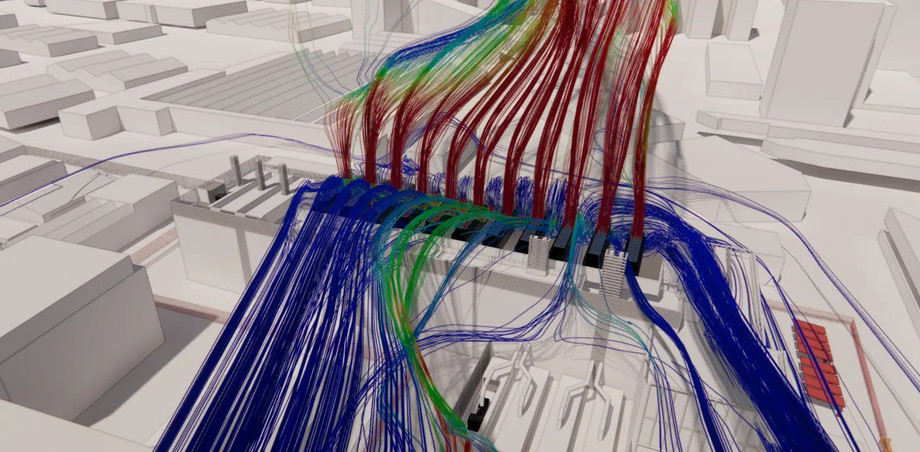
Using smoke control CFD simulation, designers can analyze how smoke travels through corridors, stairwells, and large open spaces. These simulations help identify areas where smoke accumulation could hinder visibility or breathing. With this knowledge, safety measures can be refined to ensure clearer escape paths and improved response effectiveness.
Designing Safer Evacuation And Ventilation Strategies
Smoke behavior is influenced by building geometry, ventilation systems, and temperature differences. Simulations make it possible to evaluate how these factors interact under emergency conditions. By testing various scenarios, engineers can design systems that manage smoke more effectively, directing it away from occupied zones.
This proactive approach supports safer evacuation planning and enhances coordination between architectural design and mechanical systems. When safety strategies are integrated early, buildings become more resilient without compromising aesthetic or functional goals.
The Future Of Intelligent Building Simulation
As technology advances, simulation tools continue to grow more accurate and accessible. The integration of data-driven modeling with architectural design is shaping a future where buildings are not only visually impressive but also highly responsive to human needs. Designers can now make informed decisions backed by measurable performance outcomes.
Simulation-based methods bridge the gap between theory and real-world performance. They empower professionals to create environments that balance comfort, efficiency, and safety in a single cohesive framework. As expectations for sustainable and resilient buildings rise, these advanced techniques will remain essential to shaping the built environment of tomorrow.


Comments
Post a Comment